Why Stranger Danger Isn’t Enough (And What Parents Should Teach Instead)
Most of us grew up hearing the words “stranger danger”.
But here’s the problem…
If we teach our children that danger only comes from strangers, we are not telling them the full story.
And when it comes to protecting children, half-truths don’t keep them safe.
The reality is this: the vast majority, in fact 90%, of children who experience abuse know the person who harms them. They might be a family member, a family friend, a coach, an older child, or someone in a position of trust.
That’s why in the Safe4Kids Program, we don’t just talk about “strangers”.
We teach children about Tricky People.
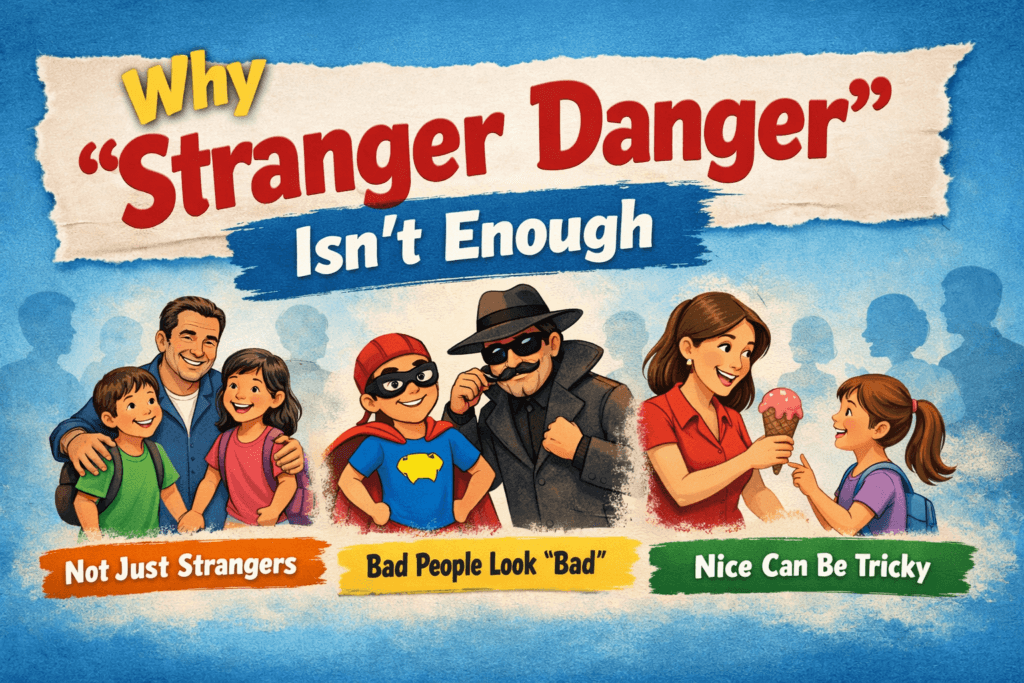
Because tricky people don’t look scary.
They don’t wear black capes and twirl their moustaches.
They can be friendly. Generous. Funny. Popular. Helpful. People we know and love.
And that’s exactly why children need more than “don’t talk to strangers”.
They need language.
They need life skills.
They need Protective Education.
Why “Stranger Danger” Isn’t Enough
When we only focus on strangers, we miss three critical realities:
- Many unsafe people are known to the child.
- Children are literal thinkers.
- Children often believe “nice = safe”.
I’ve worked in child abuse prevention education for over 35 years, and one of the biggest myths children hold is this:
“Bad people look bad.”
But in real life, tricky people may:
- Give gifts
- Offer special treats
- Break family rules “just this once”
- Ask children to keep secrets
- Tell them they are “more mature than other kids”
- Slowly blur boundaries
- Make them feel special
And here’s the scary part — they test children in small ways first.
They might:
- Encourage them to keep a “little secret”
- Let them do something they aren’t normally allowed to do
- Ask children for help instead of asking another adult
- Offer a lift without checking with parents
That’s grooming.
And children will not recognise it unless we teach them how.
So What Should We Be Teaching?
In the Safe4Kids Child Abuse Prevention Education Program, we teach two powerful themes:
Theme 1:
We all have the right to feel safe all of the time.
That means everywhere.
At home.
At school.
At sport.
Online.
At a friend’s house.
Not “most of the time.”
Not “unless it’s an adult.”
All of the time.
And children must understand the difference between:
- Being safe
- Feeling safe
Because sometimes a child may technically be “safe”, but their Early Warning Signs are going off.
Theme 2:
We Can Talk With Someone About Anything
This theme is life-changing.
And I don’t say that lightly.
Because most abuse continues for one reason:
Silence.
Tricky people rely on children:
- Feeling confused
- Feeling embarrassed
- Feeling scared of getting into trouble
- Thinking no one will believe them
- Believing they should keep a secret
So we teach children something radically empowering:
We can talk with someone about anything.
Not just the easy things.
Not just the happy things.
Anything.
Who Is the “Someone”?
Children need more than just “tell Mum or Dad.”
We teach them to build a Safety Team of five trusted adults.
A Safety Team person must:
- Listen.
- Believe.
- Be available.
- Take action if needed.
And here is something very important…
Children don’t always tell their parents first.
That doesn’t mean you’ve failed.
It means children need options.
Because sometimes:
- They’re embarrassed.
- They are being told no one will listen or believe them.
- They want to protect their family.
- They’re worried they’ll get into trouble.
- Or the unsafe person is within the family.
The goal is not control.
The goal is safety.
What Is “Anything”?
We explain to children that “anything” includes:
- Unsafe touching
- Confusing situations
- Secrets that make them feel yucky
- Online messages that don’t feel right
- Someone is asking them to break family rules
- Someone threatening them
- Something they saw on a device
- Even something they did that they regret
This is crucial.
Because tricky people often say:
“Don’t tell. Your parents will be angry.”
“You’ll get into trouble.”
“No one will believe you.”
So we teach children in advance:
“You are never in trouble for telling about something that made you feel unsafe.”
“You can tell me anything.”
“Nothing you could tell me, will ever stop me loving you.”
These sentences alone removes so much power from perpetrators.
The Power of Persistence
Theme Two also teaches persistence.
If the first adult doesn’t listen properly?
Tell another.
And another.
And another.
Until you feel safe again.
Children need to understand that if someone dismisses them, that doesn’t mean it wasn’t important.
It means they need to keep telling.
Because here is the heartbreaking truth…
Many adults who were abused as children say:
“I told once… but no one believed me.”
We must raise children who understand they deserve to be heard.
What This Means for You as a Parent
This theme isn’t just for children.
It’s for us.
Ask yourself:
- Do I react calmly when my child tells me something uncomfortable?
- Do I accidentally shut down conversation with phrases like “Don’t be silly” or “That’s nothing”?
- Do I create space for awkward conversations?
Because children test us with small disclosures first.
If we respond well to:
- Playground problems
- Friendship issues
- Minor rule-breaking
They are more likely to come to us with the big things.
Theme Two builds connection.
It builds communication.
It builds trust.
And trust is one of the strongest protective factors we can give our children.
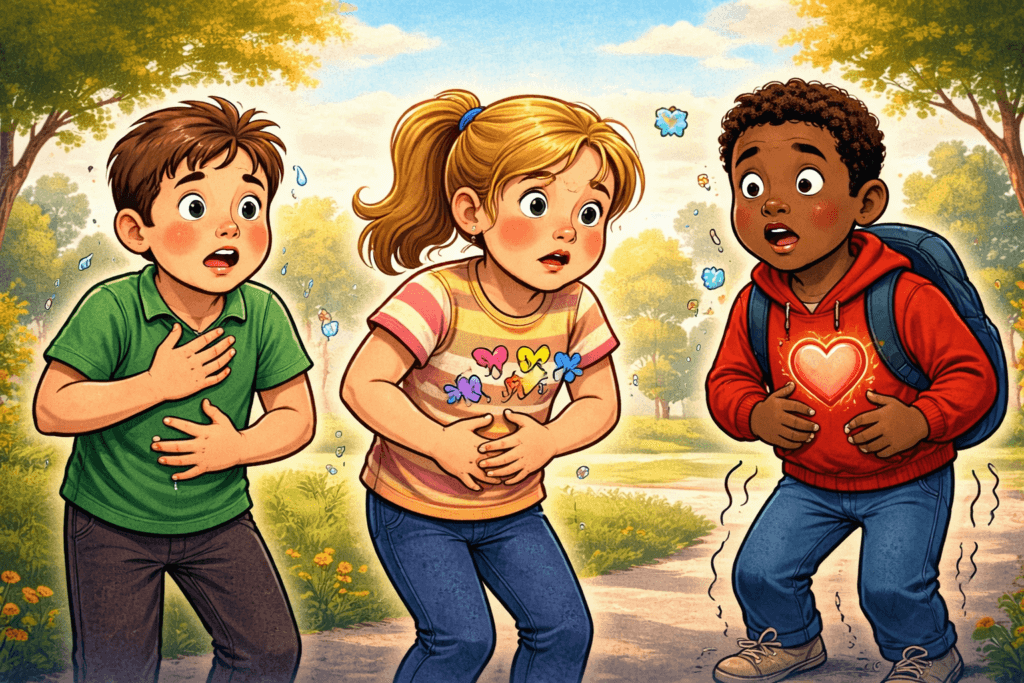
Early Warning Signs – The Superpower We Forget to Teach
Our bodies are brilliant.
Sweaty palms.
Jelly legs.
Butterflies in the tummy.
Heart racing.
These are Early Warning Signs — our body’s alarm system.
Children need to learn to recognise them.
Because tricky people often rely on confusion.
They rely on children ignoring their gut feelings.
They rely on politeness.
In my program, we teach children:
If you get your Early Warning Signs, you must keep telling an adult you trust until you feel safe again.
Notice the word persist.
One of the most heartbreaking things I hear from adults who were abused as children is:
“I told once… but no one really listened.”
We must teach children to tell and tell and tell until someone helps them.
10 Protective Lessons Every Child Needs
Here are the foundations every child should learn:
- Their full name, address and emergency number.
- To stay with a group where possible.
- To trust their Early Warning Signs.
- That adults should not ask children for help in ways that feel wrong.
- That no one is allowed to touch their private body parts.
- The correct anatomical names for body parts.
- The difference between Safe and Unsafe secrets.
- That it’s OK to say “No” — even to adults.
- How to create a Safety Team of 5 trusted adults.
- That they can talk with someone about anything.
These aren’t “one big talk” topics.
They are layered conversations over years.
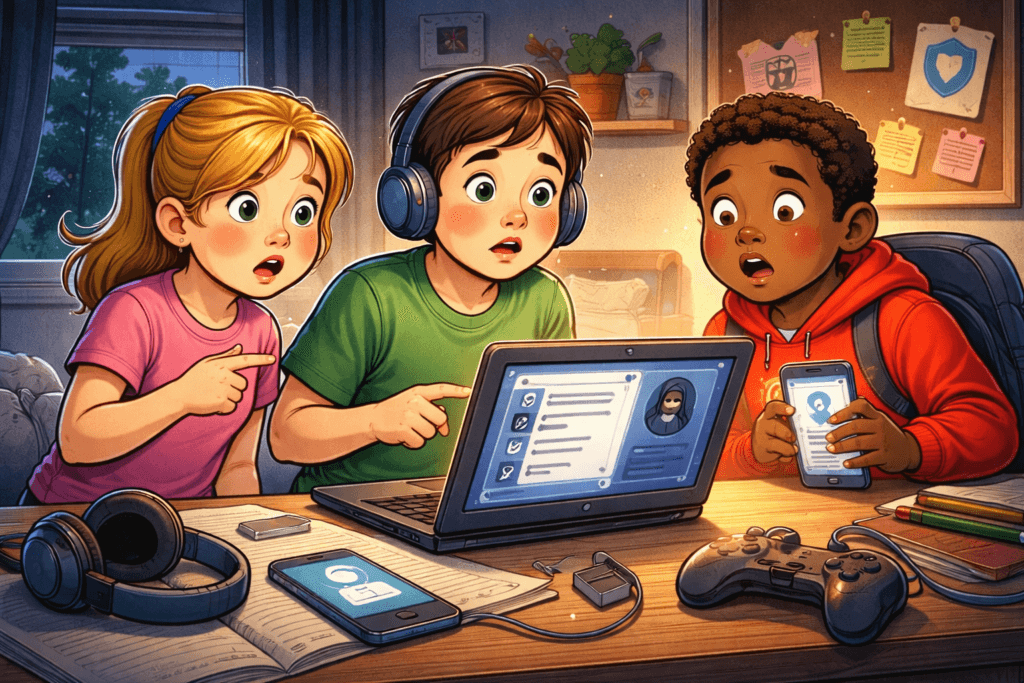
And Let’s Talk About Online Safety
Today’s tricky people are not just driving around playgrounds in white vans or offering children lollies.
They are on gaming platforms.
In chat rooms.
On social media.
Children can be groomed digitally just as easily as face-to-face, maybe even easier, because children think they are safe in their bedrooms. Which is why technology should never be in bedrooms or bathrooms.
If you haven’t had age-appropriate conversations about:
- Private pictures
- Pornography exposure
- Online grooming
- Cyber secrecy
Then we need to change that, gently, confidently, and proactively.
The Most Important Question
Let me ask you something…
If your child needed to tell you something tomorrow, something uncomfortable, embarrassing, or scary. would they have the language to do it?
Would you feel confident responding calmly?
Would you know exactly what to say?
Most parents desperately want to protect their children.
But many tell me:
- “I don’t know how to start the conversation.”
- “I don’t want to scare them.”
- “What if I say the wrong thing?”
- “I never learnt this growing up.”
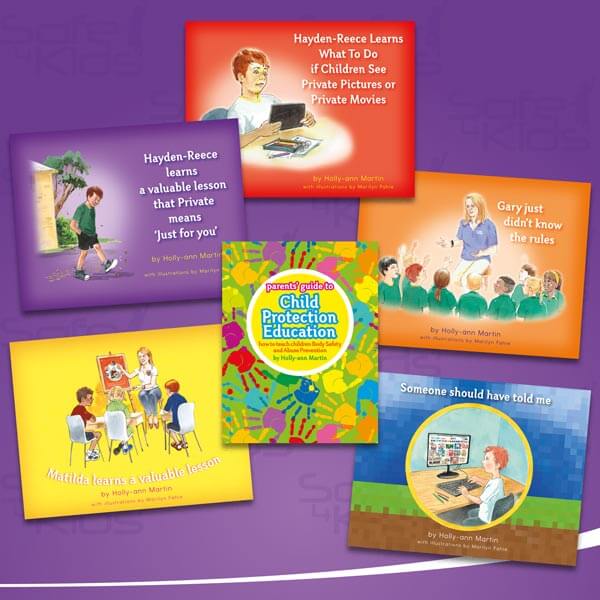
And that’s exactly why I created the Safe4Kids Parents’ Information Course
Turning Concern Into Capability
This online course is designed specifically for parents and carers.
It gives you:
✔ The language to talk about body safety confidently
✔ Step-by-step guidance on teaching Safe and Unsafe touches
✔ How to explain consent in age-appropriate ways
✔ How to teach Early Warning Signs
✔ How to create a Safety Team
✔ How to discuss pornography and private pictures
✔ How to respond if your child discloses abuse
✔ How to build open, safe communication
The course includes 21 concise videos (around 80 minutes total), so you can complete it at your own pace.
And right now, it’s just $57 AUD.
You’ll also receive a complimentary PDF of my Parents’ Guide to Child Protection Education, a practical resource to support everything you learn.
This Isn’t About Fear. It’s About Empowerment.
Protective Education:
- Reduces vulnerability
- Increases confidence
- Builds emotional intelligence
- Strengthens communication
- Teaches resilience
And here’s something powerful…
Children who understand Protective Education walk differently.
They speak differently.
They think differently.
They know:
“My body belongs to me.”
“I have the right to feel safe.”
“I can talk with someone about anything.”
Imagine your child growing up with that belief firmly planted.
That’s not fear.
That’s empowerment.
If you’re reading this thinking,
“Yes… I need to do more,”
Then this is your next step.
Don’t wait for a teachable moment that comes from a crisis.
Create the teachable moments now.
Join the Safe4Kids Parents’ Information Course today and turn your love and concern into practical, life-changing skills.
Your child’s safety is not something to leave to chance.
Let’s do this properly. Together.
Warm regards
Holly-ann Martin OAM
Managing Director
Safe4Kids